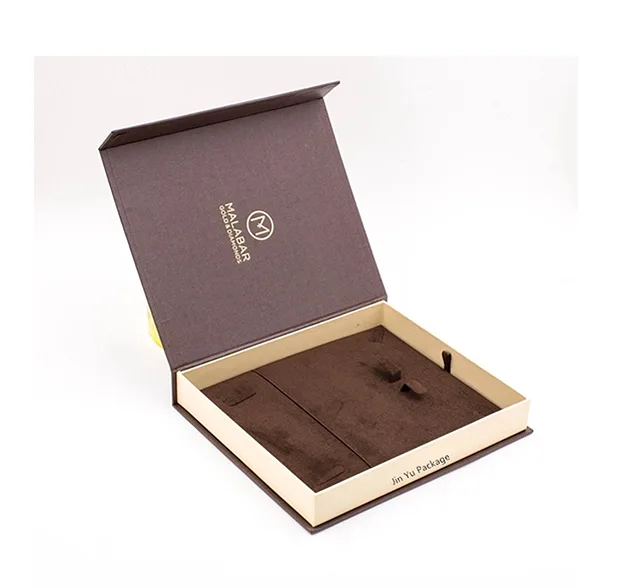
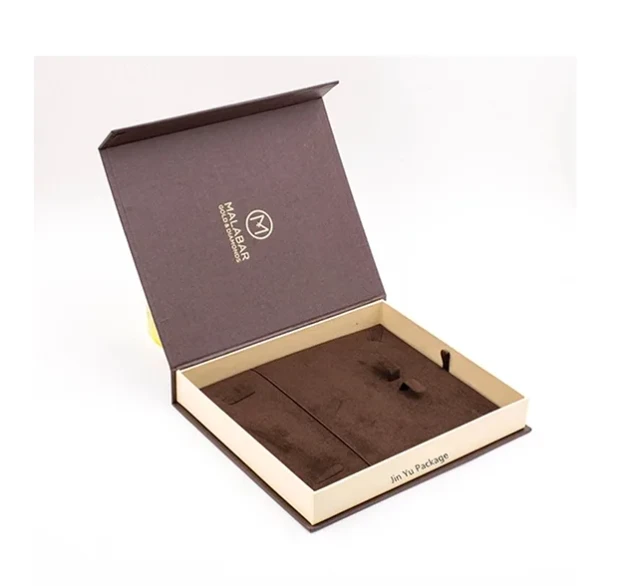
A necklace is the hardest piece in a jewelry box to control: long, flexible, and quick to tangle or tarnish. This guide covers how we hold the chain, how we keep it from moving in transit, how we stop it oxidizing, and which finishes and logo crafts belong on a high-end necklace box.
Necklace Box and Customization Overview
Jin Yu Package builds necklace boxes from new environmental materials and smart production, drawing on 20 years of packaging experience for high-end jewelry. Customization covers laser etching, PU leather, texture selection, shape recommendation and embroidery, and we supply high-end packaging to brands worldwide. Talk to us for a design consultation that improves how the jewelry is presented and tells a brand story of its own.
What Materials Can Be Used for Necklace Boxes
A beautiful necklace is not only the product of fine craftsmanship; it also needs a box that presents and protects it. Jin Yu Package has spent more than 20 years making jewelry boxes and has worked with over 400 jewelry brands, which has taught us how much material choice affects product quality and brand image. The main options are below.
Material Options at a Glance
Velvet
Velvet is the default for fine jewelry: soft enough to protect a chain and a stone, quiet enough to let the piece lead. Flocked inserts hold the necklace in place and resist scratches.
PU Leather
PU leather gives a firm, clean exterior with the feel of leather, resists wear and cleans easily. It is the most common choice for retail boxes that have to look expensive and survive daily handling.
Walnut and Oak
Wood reads as a keepsake. Walnut brings warmth and elegance; oak offers solidity at a competitive cost. Both take laser etching and carving, which makes them the natural fit for personalized and premium packaging.
Specialty and Flat Paper
Specialty and flat papers open up almost unlimited design: unique patterns can be printed or embossed directly onto the surface to carry the brand, and the cost stays modest.
Acrylic and Window Material
A transparent lid or window turns the box into a display case, so the necklace is visible without being opened. It suits retail counters and gift presentation where the first look has to do the selling.
Necklace Boxes with Different Holders
In jewelry packaging, the holder decides both how the necklace is presented and how safely it is held. Twenty years of manufacturing have produced three workable designs.
Inset Holder Necklace Box
Two slits cut in the top of the sponge hold the chain firm. This fits thinner necklaces up to about 3 mm in diameter and presents the full silhouette of the piece.
Snapper-Close Holder Necklace Box
A snap fastener on top of the inner tray holds the necklace in place. It is designed for chains between 5 and 10 mm in diameter, where a slit alone would not hold.
Hanger-Type Holder Necklace Box
Two fabric-wrapped metal hangers are fitted to the top, which suspends the necklace and presents it at its full length. This is a custom option for chains of 2 to 4 mm.
Holder design has to match chain diameter and length precisely. Drawing on more than 400 jewelry brands served, Jin Yu Package provides solutions from material selection through to structural design, so every necklace finds the place that suits it.
How to Keep the Necklace Steady During Shipping
Every buyer worries a little about movement in transit, because nobody wants to open a carton and find the chain tangled. Jin Yu Package has delivered custom packaging for more than 400 brands over 20 years, and these are the three measures that keep a necklace safe.
Point 1: Precise Sizing, Zero Redundant Space
The necklace length sets the box body, with no extra space left over, and the chain diameter and weight determine the insert. The standard layout uses two hooks to fix the ends of the chain, with the rest of the chain placed in a stash bag behind the insert, which prevents both movement and tangling.
Point 2: Differentiated Materials, Professional Protection
Different materials need different treatment. Pearl necklaces, for example, use oval slots cut to match the pearl diameter, so the strand is presented evenly and completely, without pressure on any single pearl.
Point 3: Special Fixing for Thick Chains and Large Pendants
Heavier pieces need specific components: thicker chains and large pendants use an elastic bag with a snap fastener to lock the chain, plus a dedicated elastic cord for the pendant, so the two parts hold each other and neither can shift.
Jin Yu Package builds an exclusive safety cabin for every piece through data-driven customization and careful craft. We guarantee what was promised at design stage is what arrives on delivery, and we protect the anticipation of opening the carton.
How to Prevent Necklace Oxidation and Tarnish
Customers lose confidence the moment a necklace arrives tarnished. As a manufacturer specializing in jewelry packaging, Jin Yu Package has traced the causes and the practical countermeasures across three areas.
Packaging Materials Pass Sulfur Content Testing
The face paper of a jewelry box and the velvet of an insert can contain sulfur or be of poor quality, and both tarnish a necklace quickly: released sulfur reacts chemically with metals such as silver and brass. Jin Yu Package uses sulfur-free velvets, verified by audit, which cuts the corrosion risk at the material level. The result is suitable for all precious metal jewelry, with sulfur content under 0.01% as tested by SGS.
Detail Control in the Manufacturing Process
Glue Odor Volatilization Treatment
Residual solvents in the glue used to assemble a jewelry box, such as formaldehyde and benzene, accelerate tarnish if they have not fully evaporated. Jin Yu Package follows a fixed procedure: 72 hours of ventilation and odor dispersion, with the goods moved to the warehouse only after the glue has cured and the odor is gone. In practice this reduces the tarnish risk by 40%.
Upgraded Protection with Sealed Packaging
Without sealed packaging, oxygen and sulfide attack the metal surface slowly. Jin Yu Package offers a three-layer seal.
Insert Layer
Waterproof or antioxidant paper placed inside the insert.
Medium Layer
A PE seal bag with desiccant.
Exterior Layer
A lid-base box wrapped in heat-shrink film.
Testing shows sealed packaging keeps jewelry free of tarnish for more than six months, which is what protects the shine at the moment the box is opened.
Jin Yu Package Anti-Tarnish Commitment
From plating technology through to the full packaging process, we work to three principles: eco-friendly materials, standard procedures and sealed packaging. That gives brand customers an anti-tarnish solution that runs from the factory to delivery, and every pack passes a 48-hour simulated transport tarnish test, so the customer receives the piece as bright as it was made.
Surface Treatments for Necklace Boxes
Surface treatment carries much of the packaging quality and visual hierarchy. It changes gloss, touch and protection, and it drives the first impression. These are the treatments we use most.
Matt Lamination: Superior Low-Profile Quality
Matt lamination applies a thin matt film to the surface, producing a soft, hazy finish that resists reflection from strong light. It feels fine and gentle and carries an implicit sense of luxury, especially when combined with stamped or embossed logos: the contrast between a matt background and a gloss mark is what makes the restraint read as expensive.
Gloss Lamination: Bright and Transparent Impact
Gloss lamination applies a thin, highly transparent bright film, which gives a clear, sparkling shine and maximizes the color saturation of the box body, so patterns and textures look vivid and alive.
UV Treatment: A Finishing Touch of Dimensional Gloss
UV treatment coats UV gloss oil on part or all of the surface and cures it instantly under ultraviolet light, which produces a high-gloss or raised effect. It can be applied to the whole box or used locally on logos and patterns, and the contrast between a glossy detail and a matt field pulls the eye exactly where you want it.
Beyond the technique itself, the choice depends on body material, brand concept and cost. A matt surface with partial UV, for instance, keeps the low-key quality while lifting one detail in gloss; gloss lamination is brilliant but scratches easily on dark boxes, so it needs to be judged against real use. With 20 years of experience, Jin Yu Package matches the treatment to the jewelry style and the brand concept, so touch, appearance and function all support the product.
How to Customize a Logo on the Necklace Box
A logo craft has to fit both the material and the visual intent. Five techniques cover most requirements.
Foil Stamping: A Classic Choice for Glossy Quality
A heated brass mold presses foil onto the box surface to form a bright mark. It works on paper, PU and velvet, and the high gloss it produces reads as high-end, which is why luxury packaging relies on it. Gold and silver foils add visual impact, though velvet should be adhesion-tested before stamping.
Screen Printing: Color Freedom for All Materials
Screen printing uses eco-friendly inks and is not limited by material: paper, PU, plastic and metal all work, and there is no limit on color. Compared with foil, a screen-printed logo resists rubbing and does not peel easily, which makes it the right choice for gradient colors and complex artwork.
Embossing: High-End Dimensional Touch
Embossing punches the logo into the surface with a mold, creating relief without any ink. It is usually applied to high-end PU or specialty paper, where the concave-convex feel is read by the hand. Combined with foil stamping it delivers both vision and touch, which suits gift box work for jewelry brands.
Debossing: Efficient, Eco-Friendly and Cost-Effective
A hot brass mold presses the logo directly into the surface with no additional material, which makes the process fast, inexpensive and clean. It suits simple brands built on the idea that less is more: a single silver line, a low-key matt texture, nothing more.
4-Color Printing: Precise Reproduction of Multi-Color Patterns
Complex logos, gradients and illustrations can be printed in CMYK, though only on paper or PU. It suits fashion jewelry brands that want to carry an IP image across a paper box and add visual interest to the packaging. PU leather needs surface treatment before printing, so the ink adheres properly.
Planning a necklace box with an anti-tarnish requirement? Tell us the chain diameter, metal type and target market, and we will propose the holder and sealing structure.